 Formada3D
 LiDAR riser mount for 2020 extrusion or an M3 plate (fits RPLIDAR A1 / A2 / C1, LD19 / LD06 and Mid-360 patterns)
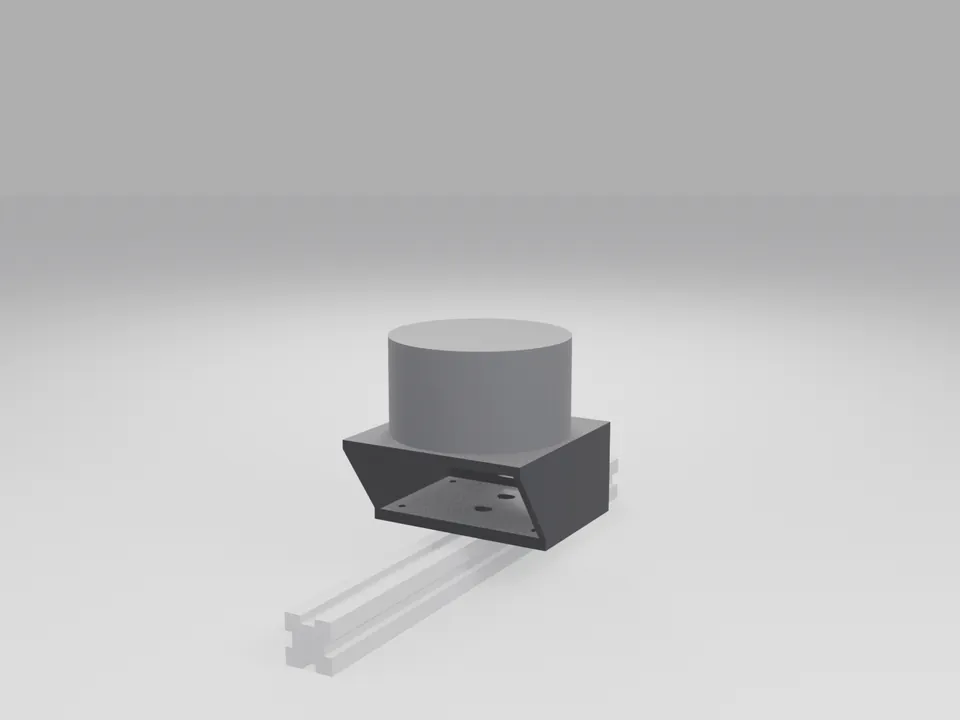
Lifts a LiDAR's scan plane 40 mm above the robot's frame, cables and wheels. The riser is an open-front PETG box: a LiDAR plate on top drilled to the maker's datasheet pattern, a base with two M5 T-nut slots for 2020 / 2040 extrusion plus four M3 corner holes for a flat plate, a back wall with a cable window, and side walls with a 45-degree front edge so a screwdriver reaches every screw. Six top patterns: RPLIDAR A1 (open-frame top so its motor and PCB hang inside), A2, C1, LD19, LD06 and Livox Mid-360 (with holes for the 3 mm aluminium heat-spreader plate the maker recommends). Printed to order in our Melbourne workshop.
From A$8 for the LD19 or LD06 riser. Printed to order in Melbourne and shipped Australia-wide; we confirm the final price and lead time before anything is printed.
On the quote page choose Request a quote (no file needed) and name this part and the option you want.
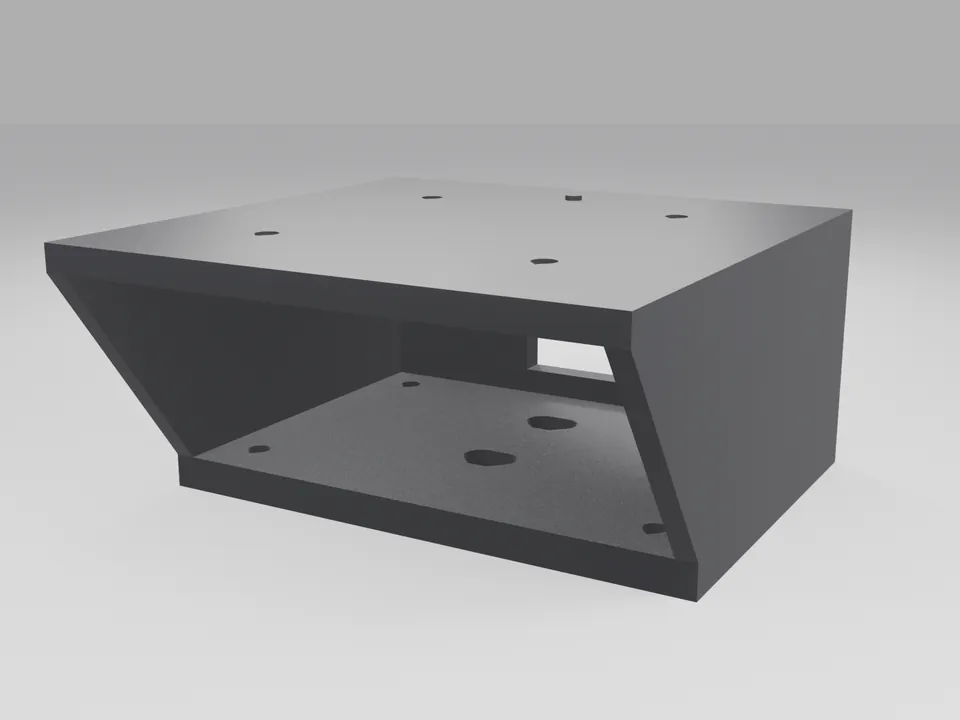
Order status. The six patterns come from the makers' datasheet drawings. For the LD06 the drawing's screw callout is partly unclear (its 3.4 mm holes take M2.5 or M3), so use the screw your unit's documentation gives. For the Mid-360, add the 3 mm aluminium plate the maker recommends for heat; the riser's top is drilled as its template.
What does it look like in use?
Renders are computer images of our own design, made from the same model we print. This family is made to order: real photos of our first prints are coming.
Specifications: material, size and what it fits
| Spec | Detail |
|---|---|
| Material | PETG, 0.24 mm layers on a 0.6 mm nozzle, at least 4 walls and 25 % infill (load-bearing), no supports. PETG-CF or PA-CF on request. Keep out of direct hot sun (PETG softens near 70 degrees C) |
| Common to all six | Height 40 mm (parametric). Base: 2 x M5 slots 20 mm apart (+-1.5 mm) on the centre line for T-nuts in a 2020 / 2040 slot, plus 4 x M3 (3.4 mm) corner holes for a flat plate or chassis. Back wall cable window, open front, 45-degree side-wall edges |
| A1 pattern | RPLIDAR A1-type: 4 x M3 thread-forming from the top at (+-28, -28) and (+-20, +42), open-frame 66 x 86 mm top so the motor and PCB hang 21 mm into the box, motor end at the open front. Scan plane about 61 mm above the extrusion. About 50 g |
| A2 / C1 patterns | A2M8 / A2M12-type: 4 x M3 clearance from below on R29.5 at 45 degrees with a locating peg, 82 x 82 mm top, scan plane about 71 mm, about 81 g. C1-type: 4 x M2.5 clearance from below on a 43 x 43 mm square, 60 x 60 mm top, scan plane about 70 mm, about 55 g |
| LD19 / LD06 patterns | LD19-type: 3 x M2 thread-forming from the top (pair 46.8 mm apart, third 31.92 mm below), 58 x 48 mm top, about 43 g. LD06-type: 3 x 3.4 mm clearance from below on a 28.2 mm square, 46 x 46 mm top, about 34 g (use the screw size your unit's documentation gives) |
| Mid-360 pattern | 4 x M3 clearance on 48 x 36 mm plus 4 x M3 at 90 x 90 mm for a user-supplied 100 x 100 x 3 mm aluminium heat-spreader plate (the top doubles as its drilling template), vents, 100 x 100 mm top. Optical centre about 87 mm above the extrusion (+3 mm with the plate). About 104 g |
| Fits | Sensors built to the published mounting drawings of the Slamtec RPLIDAR A1M8, A2M8 / A2M12 and C1, the LDROBOT LD19 and LD06, and the Livox Mid-360, on 2020 / 2040 extrusion or any plate you can drill for 4 x M3 |
| Hardware | Not included. Into the LiDAR: A1 4 x M3 x 10 thread-forming; A2 4 x M3 x 6 (max 4 mm into the unit); C1 4 x M2.5 x 6 (max 4 mm); LD19 3 x M2 x 8 thread-forming; LD06 per your unit's documentation; Mid-360 4 x M3 x 10 (through riser and plate, max 5 mm into the unit). Base: 2 x M5 x 10 + T-nuts, or 4 x M3 to a plate |
Slamtec, RPLIDAR, LDROBOT and Livox are trademarks of their owners. These are independent accessories made to the published mounting patterns, not affiliated with or endorsed by those makers.
How much does it cost?
Guide prices for printed parts, in Australian dollars. Shipping is extra; we confirm the final price, including any business minimum, before printing. Bulk and custom sizes are quoted per job.
| Option | From |
|---|---|
| LD19 or LD06 riser | A$8 |
| RPLIDAR A1 riser | A$8.95 |
| RPLIDAR C1 riser | A$9.95 |
| RPLIDAR A2 riser | A$13.95 |
| Mid-360 riser (aluminium plate not included) | A$17.95 |
| Other LiDAR pattern or height | Quoted from the datasheet, usually no extra charge |
Who it's for
ROS and SLAM robot builders, university mobile-robot labs and ag-robot prototypes that need the LiDAR up out of the frame on 2020 extrusion or a flat plate.
Safety & use
Installation & use. Designed for the uses described on this page only. Fixings are not included: use the sizes listed, check they are tight before use, and check the parts regularly for wear or damage. Not for safety-critical or overhead load-bearing use. Damage caused by misuse, modification or overloading isn't a fault in the product.
LiDAR. Designed for the listed sensor footprints only. Check screw lengths against the maker's maximum engagement into the unit, mount the Mid-360 on a 3 mm metal plate as its manual advises, and keep PETG out of hot sun. The riser carries a sensor, not a payload.
This doesn't affect your rights under the Australian Consumer Law.
Common questions
Which LiDARs does it fit?
Six top patterns, each from the maker's datasheet drawing: Slamtec RPLIDAR A1 (open-frame top), A2M8 / A2M12 and C1, LDROBOT LD19 and LD06, and the Livox Mid-360. Other patterns are usually no extra charge: send the drawing.
How does it mount to the robot?
Two M5 T-nut slots 20 mm apart on the base for 2020 / 2040 extrusion, or four M3 corner holes for a flat plate or chassis. The open front lets a screwdriver reach the base bolts and the screws that go up into the LiDAR.
How high does the scan plane end up?
The riser is 40 mm tall. Add each sensor's own scan height: about 61 mm above the extrusion for the A1, 70-71 mm for A2 and C1, 66-67 mm for LD19 and LD06, and 87 mm to the Mid-360's optical centre (90 mm with the aluminium plate). The height is parametric if you need a different number.
Why is the A1 top open?
The A1's motor and PCB hang 21 mm below its mounting face, so a solid plate cannot seat it. The A1 riser opens the plate inside the bolt pattern and puts the motor end at the open front.
What about the Mid-360's heat?
The Mid-360 manual asks for a metal plate at least 3 mm thick and 10,000 mm2 in area for heat dissipation. Our riser does not replace it: it carries a user-supplied 100 x 100 x 3 mm aluminium plate on its 90 x 90 mm corner holes and its top is drilled as the template for the plate's 48 x 36 mm pattern.
How do I order?
Use Get a quote and choose Request a quote, naming the LiDAR pattern, the colour and the quantity. We confirm the price and lead time before anything is printed.
More from the parts catalogue
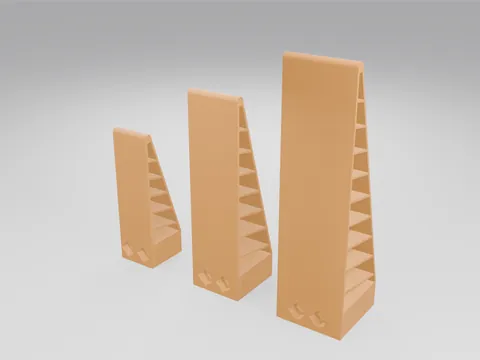
Adaptive soft gripper finger kit (fin-ray style, TPU)
Soft TPU fingers that wrap around eggs, fruit and bottles. Three sizes, one M3 mount.
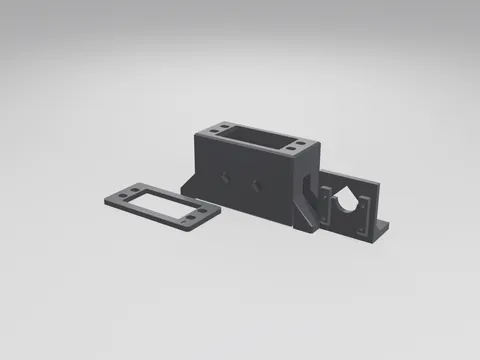
Servo bracket and camera mount kit for 2020 extrusion
Standard-servo bracket and a camera mount for 2020 aluminium extrusion, in PETG.
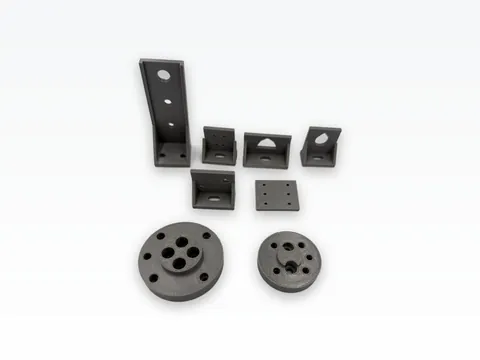
Sensor brackets, suction-cup arms and ISO 9409-1 tool-flange adapters for 2020 extrusion
Limit-switch and sensor brackets, vacuum-cup arms and ISO 9409-1 (50-4-M6, 31.5-4-M5) flange adapters, in PETG.
Last updated 11 October 2026.