 Formada3D
 PLA vs PETG vs ASA: which one for your part?
Three plastics cover most of what we print for businesses. They look similar on a shelf and behave very differently in a hot shed, in Australian sun or under a constant load. Here is how we choose between them, with the makers’ figures rather than folklore.
The short answer
- PLA for fit-check prototypes, display models and indoor jigs and organisers that stay cool. Best detail and surface, lowest price.
- PETG for most functional parts: brackets, housings, covers, cable guides, anything that gets handled or wet. Our default for business work.
- ASA for parts that live in full sun, heat or weather for years: outdoor mounts, housings on a pole, vehicle exterior parts. Ordered in for your job.
Side by side
The heat figures are the heat deflection temperature at 0.45 MPa from the Bambu Lab technical data sheets we print from. Strength and flexibility are our own 1–5 ratings from the same sheets, as used in our materials guide and the ⓘ cards in the quote.
| Material | Softens at | Strength | Flex | Sun & weather | Finish | At Formada3D |
|---|---|---|---|---|---|---|
| PLA | About 57 °C | Indoor only | Smooth with a soft sheen; fine layer lines visible up close. | In stock · instant price | ||
| PETG | About 69 °C | Outdoor OK; shade or occasional sun | Glossy; light colours look slightly translucent. | In stock · instant price | ||
| ASA | About 100 °C | Full sun and weather for years | Matte. | Ordered in · +3–5 days |
Sources: Bambu Lab PLA Basic technical data sheet V3.0; Bambu Lab PETG HF technical data sheet V1.0; Bambu Lab ASA technical data sheet V3.0. Typical values for the raw material, not guaranteed properties of a printed part (see the note at the end).
Heat: the number that catches people out
A plastic does not have to melt to fail. It only has to get soft enough to sag, creep or let a screw pull through. The figure to watch is the heat deflection temperature (HDT): the temperature at which a standard test bar bends a set amount under a light load. At 0.45 MPa the sheets give about 57 °C for PLA, about 69 °C for PETG and about 100 °C for ASA. Two cautions: some makers test annealed samples, so an un-annealed print can soften a little sooner, and a part with a steady load on it will move well before the HDT.
In Australia that 57 °C for PLA is the problem. A closed car on a summer day, a dark part on a north-facing wall, a shed roof space or the inside of an equipment box in the sun can all pass it, and a PLA part left there softens and sags. PETG gives you a useful margin for anything indoors, in a ventilated enclosure or near warm electronics. ASA is the one we pick for a housing that sits in the sun with electronics inside it, or a bracket next to a motor.
Need more than 100 °C? That is where the three run out. ABS gives about 87 °C and keeps the cost down indoors, and carbon-fibre nylon PAHT-CF holds its shape to about 194 °C (dried, annealed). Both are ordered in; see the materials guide.
Sun and weather
UV breaks down most plastics over time: colours fade, the surface goes chalky and the part gets brittle. Australia has some of the highest UV levels in the world (ARPANSA), so “outdoor rated” means more here than it does in a European datasheet example.
- PLA is an indoor material. It yellows, goes brittle and, in the sun, warm enough to deform. Keep it out of hot cars, dashboards and sunny windows.
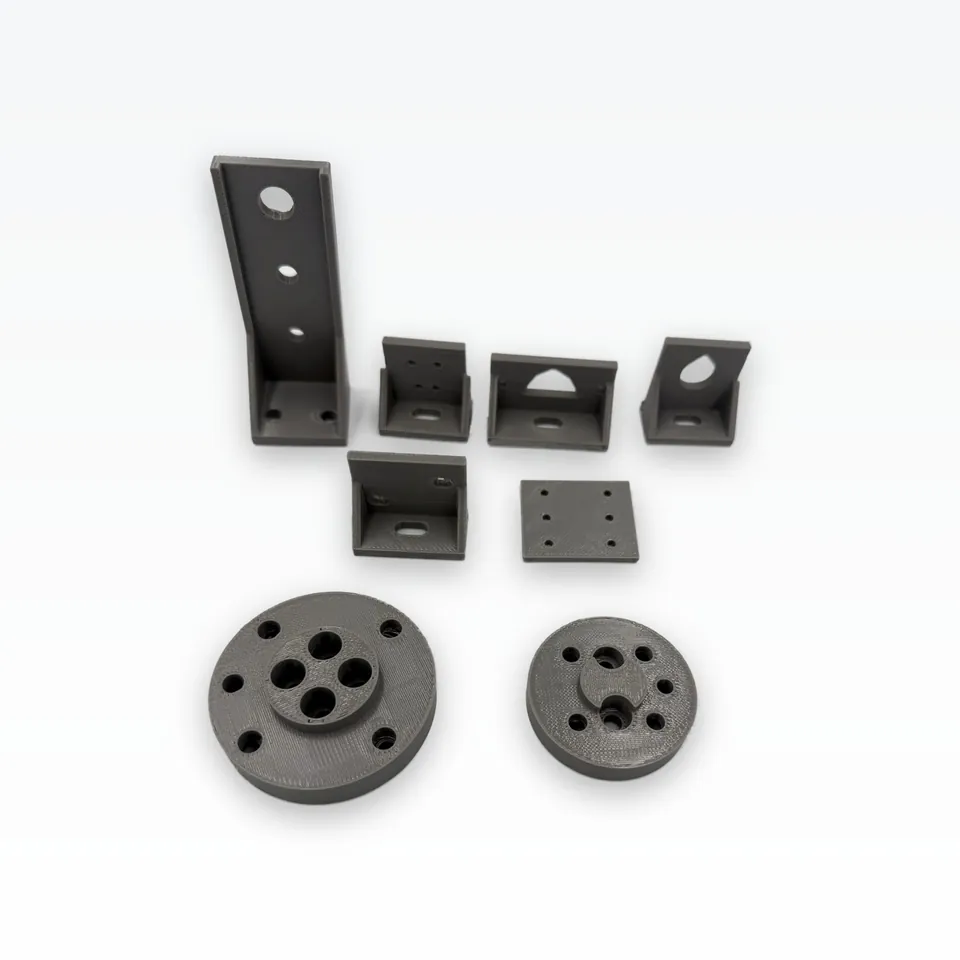
- PETG holds up well in the weather and does not mind water, so it is fine for garden parts, covers and anything in the shade or in occasional sun. For years in full sun we move to ASA.
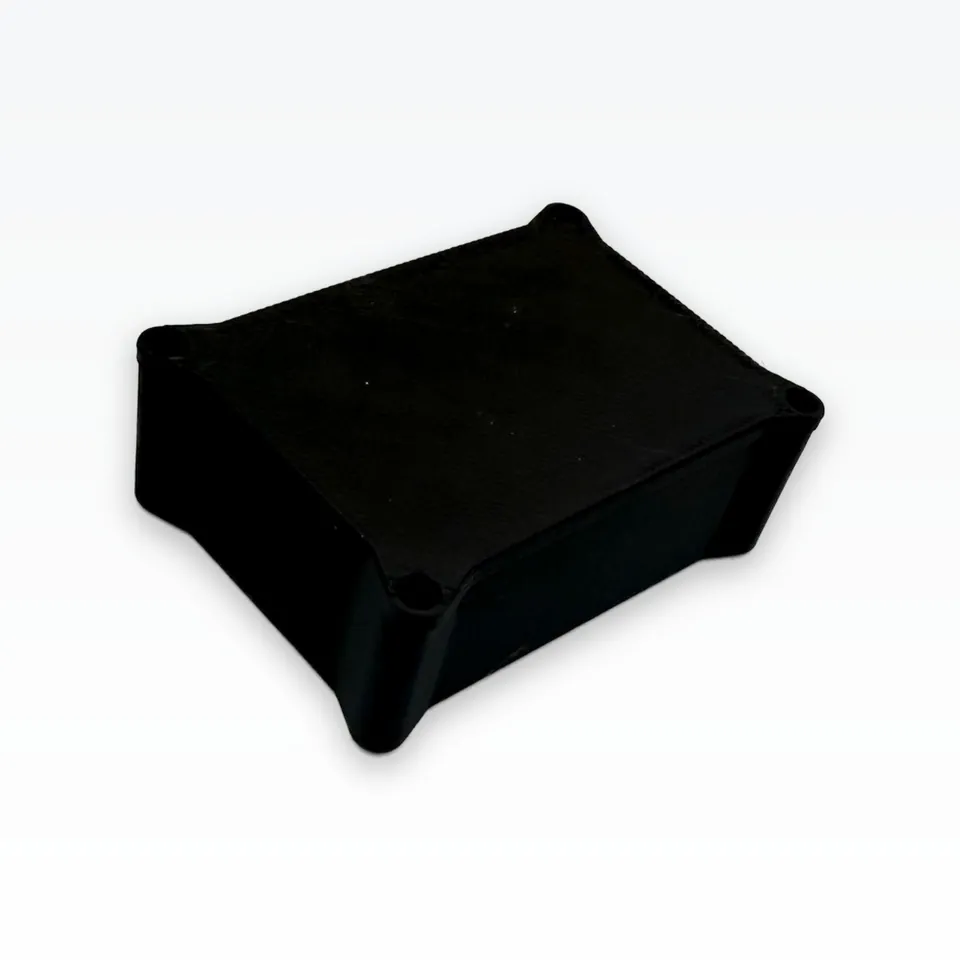
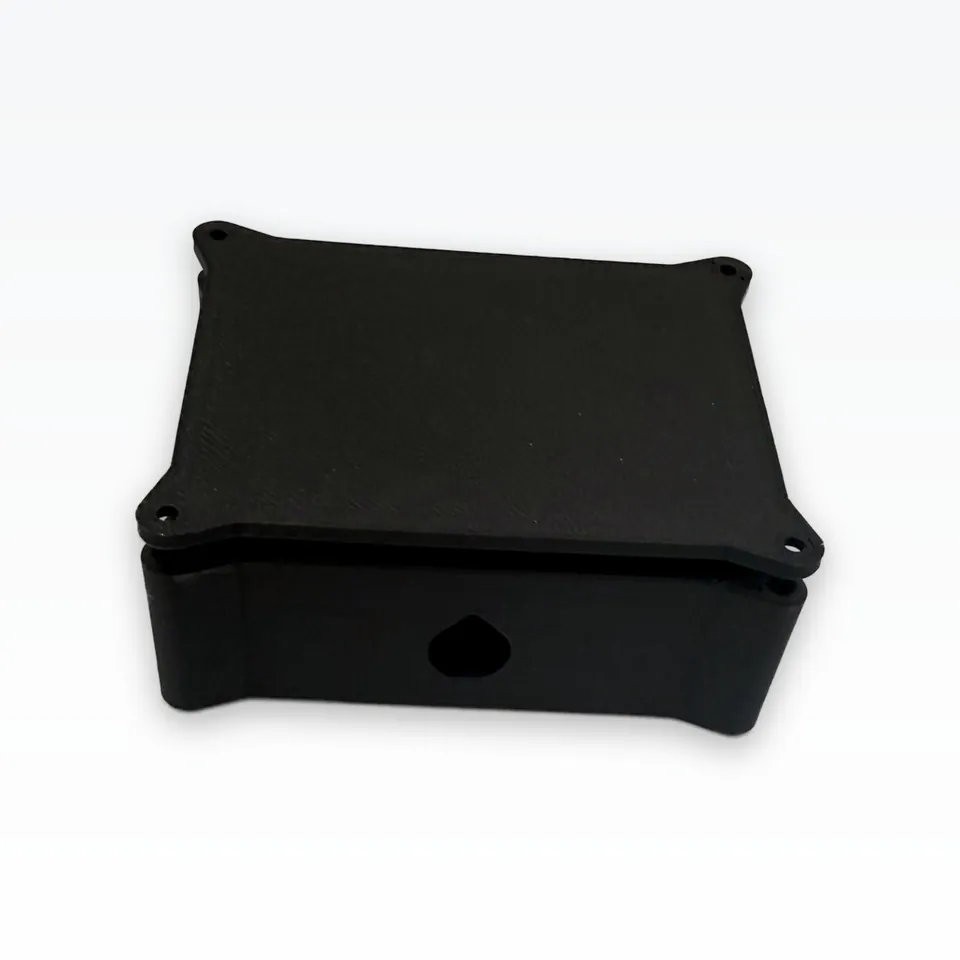
- ASA was developed as a UV-stable alternative to ABS. It resists UV and weather and keeps its colour, which is why we spec it for the mesh node case that lives on a pole, and for outdoor sensor housings. We recommend black for outdoor parts: pigments shield the plastic underneath, and black hides the dust.
- ABS, for comparison, yellows and goes chalky in long-term sun. Use it indoors or in shade and leave the outdoor jobs to ASA.
Strength, stiffness and toughness
“Which is strongest?” is the question we are asked most, and the honest answer is that for an everyday bracket the choice between these three is rarely decided by strength: our rating from the datasheets gives all three 3 out of 5. What differs is how they fail:
- PLA is the stiffest of the three and resists bending well until it suddenly snaps. It also creeps: a PLA clamp or a hook holding a steady load slowly deforms over weeks, and clips that flex again and again fatigue and crack.
- PETG gives a little before it breaks, so it survives drops and over-tightened screws better. That toughness is why it is our go-to functional plastic, from servo and camera brackets to cable guides.
- ASA behaves like ABS: tough, a bit of give, and it keeps those properties when warm. Easy to sand, drill and glue.
If stiffness really is the limit, carbon-fibre grades help: PETG-CF is stiffer than PETG and still fine outdoors, PLA-CF makes a very stiff indoor jig, and PAHT-CF is the structural pick for robot parts and end-effectors. They are priced on request. Wall count, infill and print orientation change the strength of a printed part far more than swapping between PLA, PETG and ASA, so if a part is loaded, tell us the load and we print it accordingly.
Finish, detail and colour
PLA gives the cleanest surface of the FDM plastics, with fine layer lines you only see up close, and it holds sharp corners and small text well. PETG prints glossy and light colours look slightly translucent; it strings a little, so very fine cosmetic detail is not its strength. ASA is matte and a bit more forgiving to the eye, but we would not pick it for a part whose job is to look pretty.
Colour is practical as well as cosmetic. PLA and PETG come in any of the 16 colours in the quote picker, with more on request (up to 2 extra days). ASA is ordered in, in black, white, grey and more. For a part that sits in the sun, pick black.
Printing, price and lead time
All three print on the same machines in our Melbourne workshop and we quote the same tolerance for them: about ±0.2–0.3 mm on most features, with holes printing slightly small, so tell us the fit you need. The practical differences are in stock and in setup.
- PLA and PETG are on the shelf. Upload STEP, STL, 3MF or OBJ to the instant quote and the price updates as you switch between them. Most jobs ship in 3–5 days.
- ASA is ordered in for your job, which adds 3–5 days. It shrinks more as it cools, so we print it in an enclosed printer on a textured plate and will sometimes add a brim or adjust a large flat part; that is our job, not yours, but it is why a big ASA plate can take a little longer.
- Thin walls: for all three we print three or more walls on functional parts, and more on anything that carries a load. If your CAD has a 0.8 mm wall, say so and we will check it before printing.
A simple way to choose
It stays cool and indoors
- Fit-check and form prototypes
- Display models, signage, props
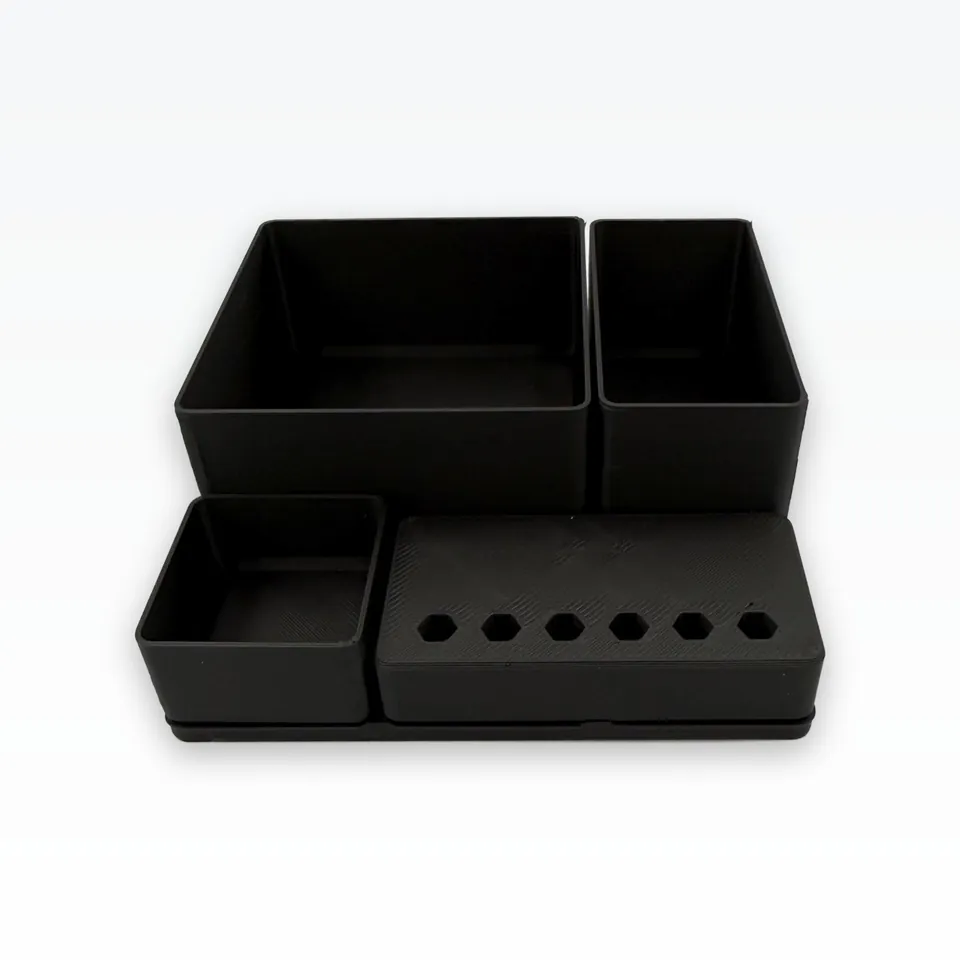
- Desk and indoor organisers
- Enclosures that stay cool
It has a job to do
- Brackets, housings, covers
- Cable clips and guides
- Parts that get wet or handled
- Outdoor in shade or occasional sun
It lives in sun or heat
- Outdoor mounts and housings
- Pole, roof and vehicle exterior parts
- Near motors and warm electronics
- Anything that must keep its colour
Still unsure? Tell us what the part has to do, where it lives and what it holds, and we will recommend one, or print a sample in two materials so you can test them side by side.
Values and suitable use
Typical datasheet values for the raw material, not guaranteed properties of a printed part. Our parts are prototypes and general-purpose parts: not designed or tested for aircraft, vehicle safety systems, medical devices, life support, lifting or load-bearing safety equipment, pressure vessels, weapons, or any use where failure could injure or kill someone. Test a sample for your use. This doesn’t affect your rights under the Australian Consumer Law. Full wording: terms, suitability.
Sources
- Bambu Lab PLA Basic technical data sheet V3.0 (heat deflection temperature, page 2).
- Bambu Lab PETG HF technical data sheet V1.0 (page 2).
- Bambu Lab ASA technical data sheet V3.0 (page 2).
- Bambu Lab ABS technical data sheet V3.0 and Bambu Lab PAHT-CF technical data sheet V3.0 for the two alternatives named above.
- ARPANSA, Sun exposure (UV levels in Australia).
- Our materials guide (data version 2026-10-11.3), the source of the ratings, tolerances and availability in this article.
Common questions
Which is stronger: PLA, PETG or ASA?
Our rating from the makers’ datasheets gives all three 3 out of 5 for strength, so none of them is clearly “the strong one”. They fail differently: PLA is the stiffest but snaps and slowly creeps under constant load; PETG and ASA bend a little before they break and take knocks better. For flexibility PLA rates 1 out of 5 against 2 for PETG and ASA. For a part that is really loaded, PAHT-CF (carbon-fibre nylon) is the step up.
Why use ASA instead of PETG?
Two reasons: heat and sun. ASA softens at about 100 °C against about 69 °C for PETG (heat deflection temperature at 0.45 MPa, Bambu Lab datasheets), and it is made to resist UV and weather and keep its colour. If the part lives in full sun for years, sits in a hot shed or vehicle, or mounts near a warm motor, ASA is the safer pick. Indoors, or outdoors in the shade, PETG does the job for less and ships sooner.
Why use PETG instead of PLA?
PETG is tougher, copes with more heat (about 69 °C against about 57 °C) and does not mind water or weather. It is the material we reach for first for brackets, housings, cable clips and anything that gets handled. PLA wins when the part is a fit-check prototype, a display model or an indoor organiser, where its sharper detail, better surface and lower price matter more.
Does ASA smell as bad as ABS when printed?
ASA and ABS are both styrene-based plastics and both give off an odour while printing, which is why we print them in enclosed printers in our workshop. You receive the finished part; nothing is printed on your premises.
Can PLA be used outdoors?
For a short time in the shade, yes. For anything that stays outside we say no: it softens at about 55–60 °C, which a closed car, a north-facing wall or a dark part in summer sun can reach, and it goes brittle with UV. Use PETG (shade, occasional sun) or ASA (full sun, years).
Do you print all three?
Yes, in our Melbourne workshop. PLA and PETG are in stock and price instantly in the quote. ASA is ordered in for your job, which adds 3–5 days to the lead time. We quote about ±0.2–0.3 mm on most features for all three; holes print slightly small, so tell us the fit you need.
Have a file? Price it in PLA, PETG or ASA.
Upload STEP, STL, 3MF or OBJ and switch materials in the quote: the price updates instantly. Each material has a ⓘ card with the same figures as this guide.
Published 12 October 2026. Figures from materials data version 2026-10-11.3.